German Seaport Workers Move to an Indefinite Strike Ballot
Nearly 65 percent rejected the employers' offer; the vote runs to 1 October and needs a 75 percent yes
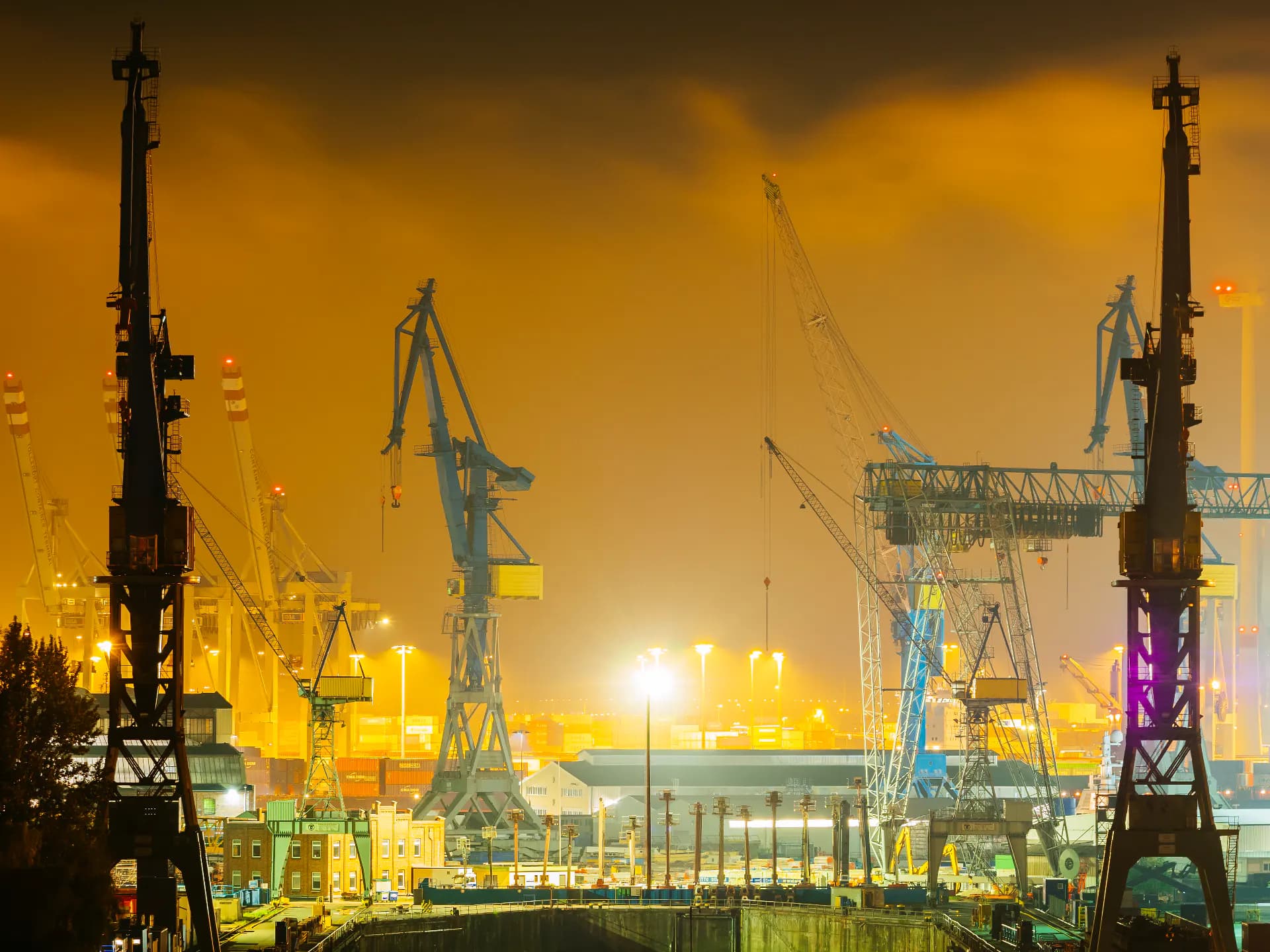
Workers at Germany's main seaports have rejected the employers' latest offer and their union has opened a ballot on indefinite strike action, putting the container gateways of the North Range on notice for the first week of October.
More than 5,500 employees took part in the consultation that closed on 14 September. Of those, 3,578 voted to reject the offer from the Central Association of German Seaport Operators and 1,945 voted to accept, a rejection rate of 64.7 percent. Ver.di has now opened a membership ballot running to the evening of 1 October. If at least 75 percent of those voting back industrial action, the union can call an open-ended strike rather than the warning stoppages seen so far this round.
The dispute covers roughly 11,000 workers at Hamburg, Bremen and Bremerhaven, Emden, Brake and Wilhelmshaven. They have been without a contract since 31 July.
The gap is not enormous in percentage terms. Ver.di opened in late July asking for 8.2 percent on hourly pay, or at least 2.50 euros an hour, over a twelve-month term. The employers began at 5.3 percent in two stages with a one-off payment, then restructured that into two options: 3.4 percent over twelve months backdated to 1 August, with a container allowance and higher holiday pay, or 5.1 percent over eighteen months on similar terms. The 200 euro increase in holiday pay applies across the workforce in the current offer.
What the arithmetic does not show is the second argument. Ver.di has put workplace risk alongside pay, and named the growth in drone flights over port facilities as a new hazard on top of the established ones of heavy lifts and dangerous goods handling. Drone incursions over German ports and military sites have been a recurring security question this year. Their appearance in a wage claim is a sign that the people working under them have stopped treating them as somebody else's problem.
For shippers the timing is the exposure. A strike authorised on 1 October would land in the run-up to the Chinese Golden Week rebound in bookings, with Asia-Europe strings already absorbing congestion at the loading end and carriers moving services back through Suez. German terminals do not have the yard slack to work off a multi-day stoppage quickly; the last extended round of port disputes pushed waiting times into weeks and moved boxes to Rotterdam and Antwerp, where they compete for capacity that is not spare either.
Nothing is certain until the ballot closes. A 75 percent threshold is high, and both sides have room to return to the table before 1 October — the employers have already moved twice. But a 64.7 percent rejection on a turnout above 5,500 is a stronger mandate than the union carried into the previous escalation, and the container allowance in the current offer does not appear to have bought what it was meant to buy.
The consultation result and the ballot timetable were published by ver.di's Hamburg district.
This story is part of the Maritime Briefing of 20 September 2026.