DP World Names Its First Methanol Dual-Fuel Box Ship, the 1,250 teu DP World London
The Portugal-flagged feeder bunkered methanol at Rotterdam in June and runs a North Europe service
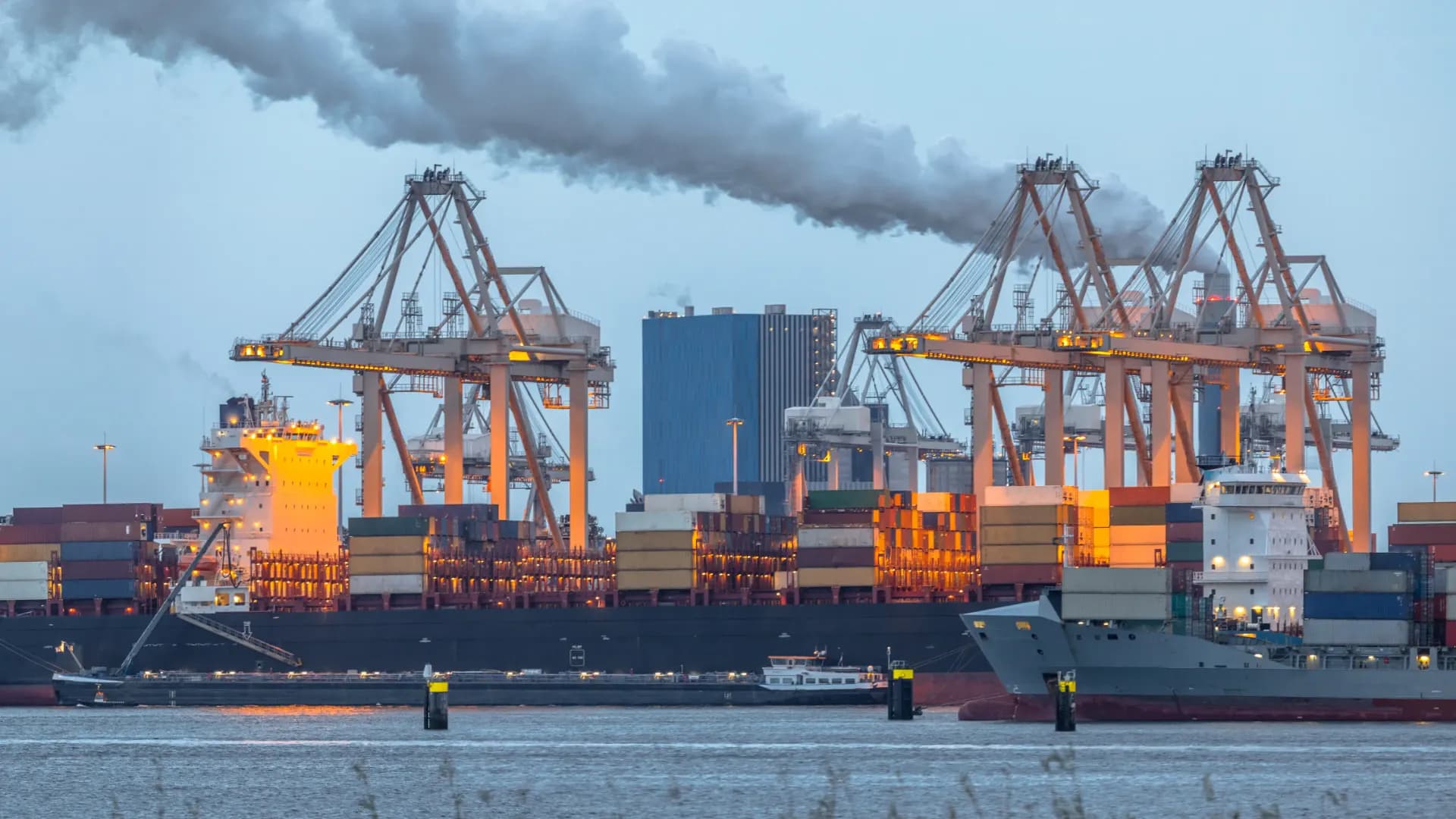
DP World's Shipping Solutions business has officially unveiled and named its first methanol dual-fuel container vessel, the 1,250 teu DP World London, which was built in China and delivered in April 2026.
The naming took place on 31 August. The ship is owned by Germany's Elbdeich Reederei and operated by Shipping Solutions, is registered under the Portuguese flag and will run on the company's North Europe service. At 148 metres in length she sits in the feeder class rather than the deep-sea trades, which is where methanol propulsion has so far had the least penetration despite being the segment with the shortest and most predictable bunkering patterns.
The vessel is equipped with a five-cylinder main engine and exhaust gas recirculation technology intended to reduce emissions and support compliance with international environmental standards. She completed her first methanol bunkering at Rotterdam on 25 June 2026, with Unibarge acting as the bunkering partner and Methanex supplying the fuel. A bunker operation of that kind is the practical test of whether a fuel is available on a service rather than merely installed on a ship.
"This is a proud moment for our Shipping Solutions team. Aarhus is where our story began, and it remains central to our character. Our DNA is about staying close to customers, keeping our word, staying calm in volatile markets and finding practical solutions when conditions change," said Martin Gaard Christiansen, chief executive of Shipping Solutions EAM at DP World.
The company frames the vessel as an investment in fleet modernisation and lower-emission transport that strengthens its shipping network across European trade routes, and as a component of an integrated offering that runs across ports, terminals, marine services, inland logistics and freight forwarding. For a terminal operator that has extended into carriage, owning the ship as well as the berth changes what it can commit to a customer on a fuel that is not yet widely available.