Crewmember missing after bulk carrier struck in Strait of Hormuz
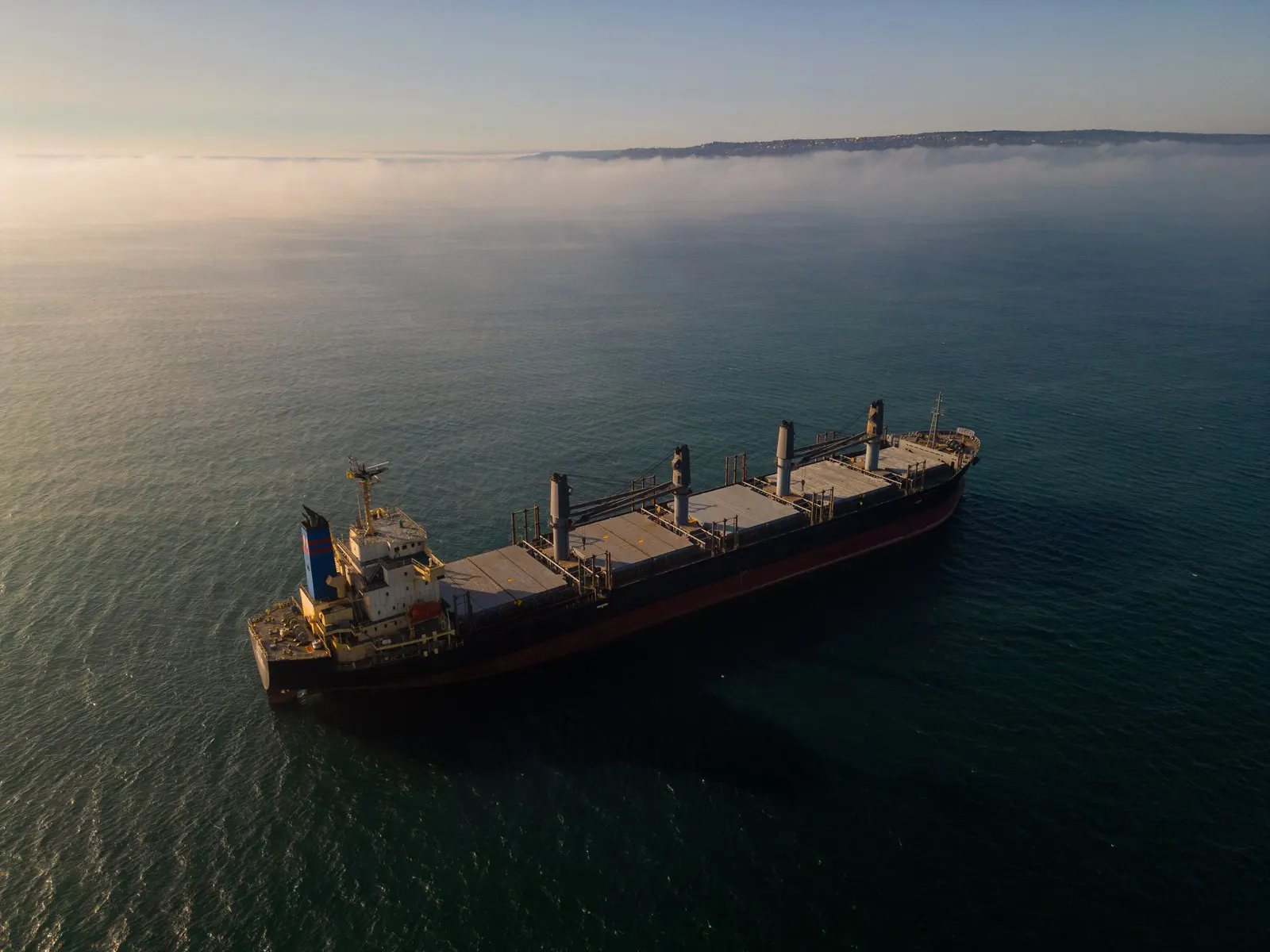
A seafarer is missing after a Greek-managed bulk carrier was hit by an unidentified projectile while transiting the Strait of Hormuz northbound, the latest casualty in waters off the Omani coast that have become the most dangerous stretch of the Gulf approaches. The Liberian-flagged Minoan Pioneer was struck at around 2200 UTC on Monday 3 August, approximately 20 nautical miles northeast of Khasab on the Musandam Peninsula.
The projectile hit the engine room. The vessel suffered a complete blackout and a fire took hold in the accommodation block, after which the crew abandoned ship. The missing man is the third engineer. His status has not been independently confirmed and no fatality has been reported, which leaves him missing rather than lost. A distress call was broadcast on VHF channel 16 and relayed by a passing tanker; military authorities acknowledged receiving it and began investigating.
The ship is a 2011-built vessel of 229 metres, owned through a single-ship company and managed commercially and technically from Greece. She was in the northbound lane of the traffic separation scheme when she was hit, which is to say she was where she was supposed to be, on the route that has until now been treated as the safer of the two available.
This was the fourth maritime security incident near the Musandam Peninsula within five days. Two near-misses on 2 August involved a very large crude carrier and an aframax tanker, and an explosion was heard close to an unnamed tanker in roughly the same position around 24 hours before the Minoan Pioneer was struck. The concentration of incidents in a single area suggests a deliberate focus rather than a scattering of opportunistic attacks.
Attribution remains entirely open. The projectile has been described only as unidentified, no party has claimed the attack, and the drone theories circulating are risk-consultancy inference rather than any government assessment. For owners the practical consequence is that the Omani coastal route, which was adopted precisely because it offered some protection, no longer clearly does. That leaves the northbound transit without a variant that can be presented to a crew as the safe one.