COSCO Car Carrier Abandoned Off Costa Rica After Engine Room Fire
All twenty-two crew were rescued from a Chinese-operated car carrier that caught fire in the engine room deep in the eastern Pacific, in a response coordinated from the United States and carried out by a passing bulk carrier. The Min Jiang Kou, a 7,500-vehicle pure car and truck carrier operated by a COSCO subsidiary, sent a distress alert at around 13:09 on 8 August while roughly 630 miles south of Costa Rica, well beyond the range of shore-based rescue assets.
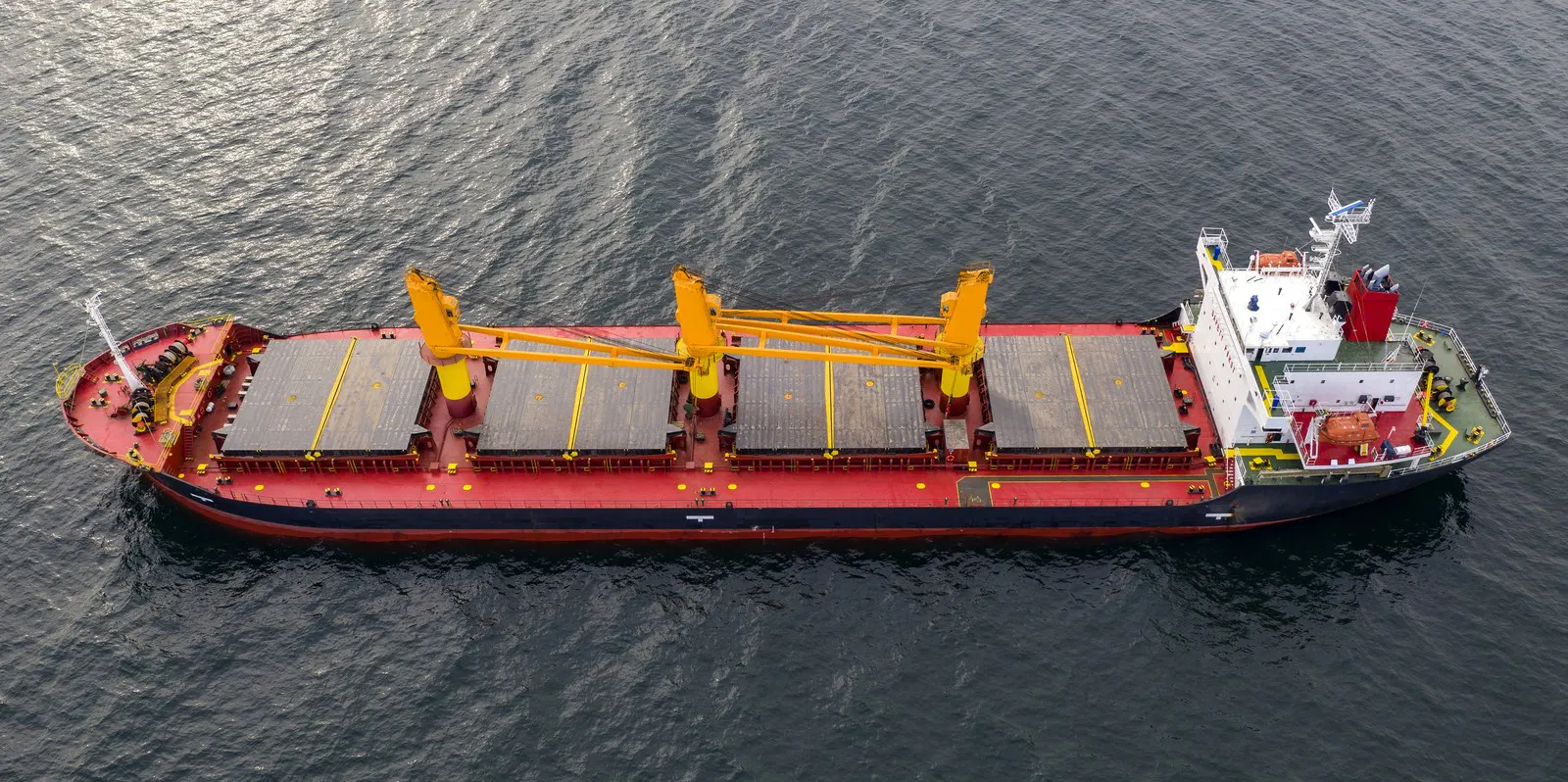
The United States Coast Guard's Southwest District took the case and used the international ship reporting system to identify merchant vessels in the area. The bulk carrier Jin Hai Ping recovered the twenty-two crew and continued towards Akita in Japan with them aboard, while the tanker Degu stood by during the operation. No deaths or injuries were reported. A Coast Guard officer involved in the case described the outcome as a demonstration of what the reporting system is designed to achieve in waters where no cutter or aircraft can reach a casualty in time.
Accounts differ on the vessel's registry. The Coast Guard and most subsequent reporting identify her as Marshall Islands-flagged, while one account describes her as Chinese-flagged. Her measurements are given as 199.9 metres overall with dual-fuel machinery capable of running on liquefied natural gas. She was on passage from Tianjin to Manta in Ecuador with a cargo of automobiles, the number of which has not been reported, and no pollution has been reported from the casualty. A commercial salvage company has been engaged.
Engine room fires on car carriers occupy an awkward position in the industry's risk thinking. Most of the attention on this ship type has gone to fires that start in the cargo, particularly since the growth of electric vehicle shipments, and to the difficulty of fighting a fire on enclosed decks packed with vehicles. A fire that starts in the machinery space is a more conventional casualty, but on a vessel of this design it threatens the ventilation and firefighting systems that the cargo decks depend on, which is why abandonment becomes the reasonable choice quickly.
What made the difference here was distance. Six hundred miles offshore there is no realistic prospect of a helicopter or a lifeboat station, and survival depends entirely on whether another merchant ship is close enough to divert. The reporting system that produced the Jin Hai Ping is voluntary, unglamorous and costs participating owners the price of a position report, and it remains the only thing standing between a crew in that position and an open-ocean abandonment with no one coming.
Ships in this story