VLCC Caroline Bezengi Still Leaking Crude off Oman After Ten Weeks
Imagery from 27 August shows no hull deformation, with lightering held off until the Khareef eases
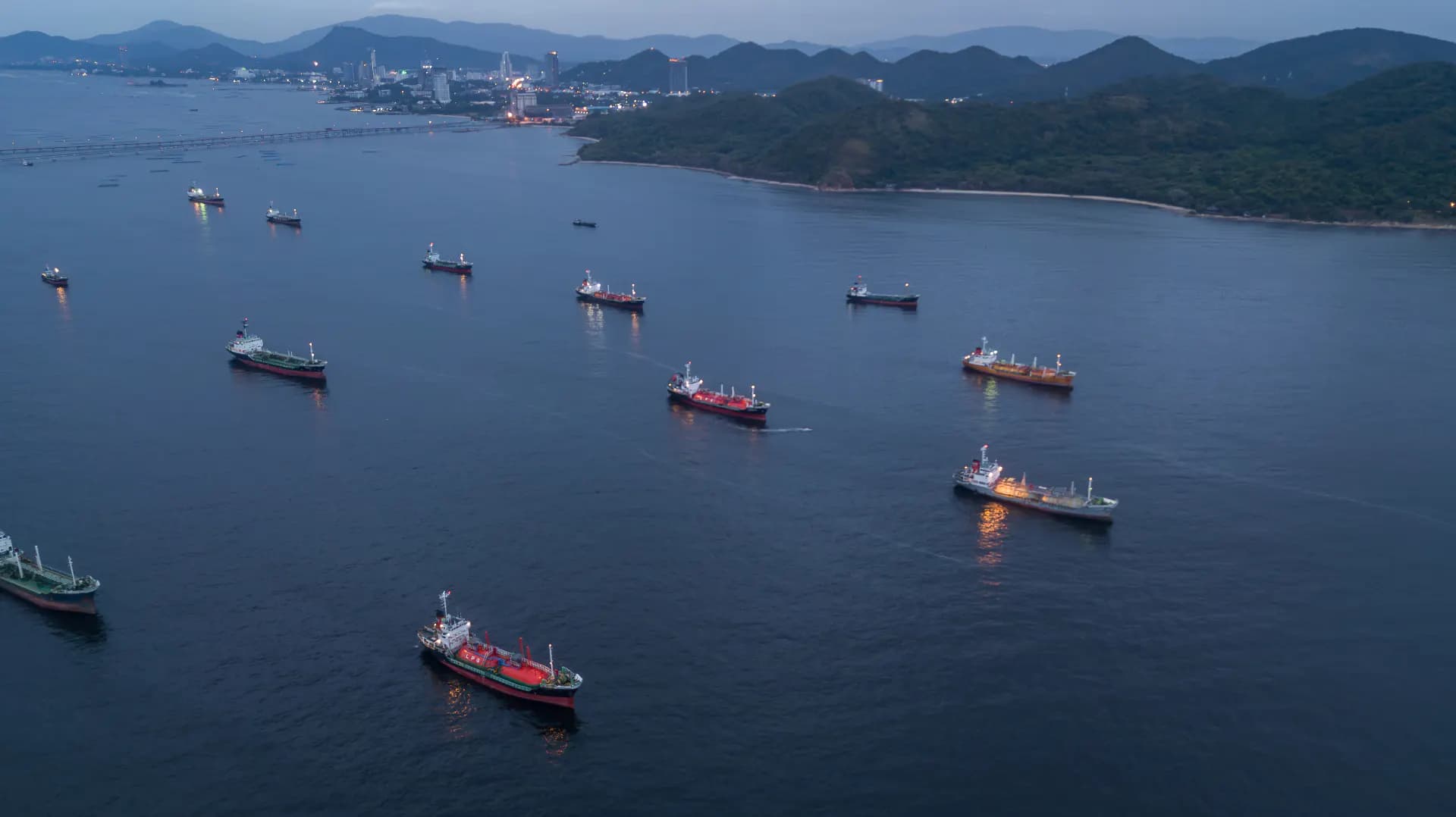
The wreck of the VLCC Caroline Bezengi remains intact on the rocks off Oman, more than ten weeks after she was beached, and she is still leaking crude oil into the Arabian Sea.
Imagery taken on 27 August shows no deformation of the hull, although the tanker has probably settled deeper in the water. The leak appears no worse than when she was last seen on 22 August, when heavy seas were washing across the main deck. A plume from the leak is still visible on the surface, spreading towards the north-east.
The tanker has been aground on Jazirat Al Qibliyyah, one of the Hallaniyat Islands off Dhofar in the south-west of Oman, since about 23 June. She was hit by an explosion on 8 June while off the Omani coast, nine days after completing a Suez Canal transit and shortly after leaving the Maritime Security Transit Corridor. Her crew were taken off without injury some four days later.
She had loaded at Novorossiysk and was bound for Gujarat. The vessel is a sanctioned vessel under EU, UK and US measures, and has a past association with the Russian state owner Sovcomflot, placing her squarely in the dark fleet trade that has grown up around those restrictions.
Ambrey is coordinating the salvage, with a brief to lighter the cargo if that proves feasible and to refloat and recover the tanker if her condition allows. An oil clean-up operation is being prepared in case she breaks up. No press statement has been issued since 13 August, and there has been no word from the Oman News Agency, which suggests no immediate fear of a break-up.
Weather is the constraint. Khareef conditions are still set in over the area, with wave heights of two to four metres and south-westerly winds around 25 metres per second. Forecasts point to conditions worsening from 3 September. There is no sign of salvage activity around the wreck, nor of a forward base being established on Hallaniyat some 20 nautical miles to the west, where there is a 1,300-metre runway and a small protected harbour. Better conditions for lightering and a possible refloat can be expected towards the end of September.
The salvor took full membership of the International Salvage Union only in May of this year, but was responsible for the recovery of the Greek-registered Panamax Sounion, attacked and set alight in the Red Sea in August 2024. That operation put a salvage crew back on board while the tanker was still burning, towed her north and recovered most of the cargo.