CSSC Net Profit Rises 163% as Its Order Backlog Reaches 729 Ships
New orders for 177 civil and offshore vessels lifted contracted deadweight 128.8% year on year
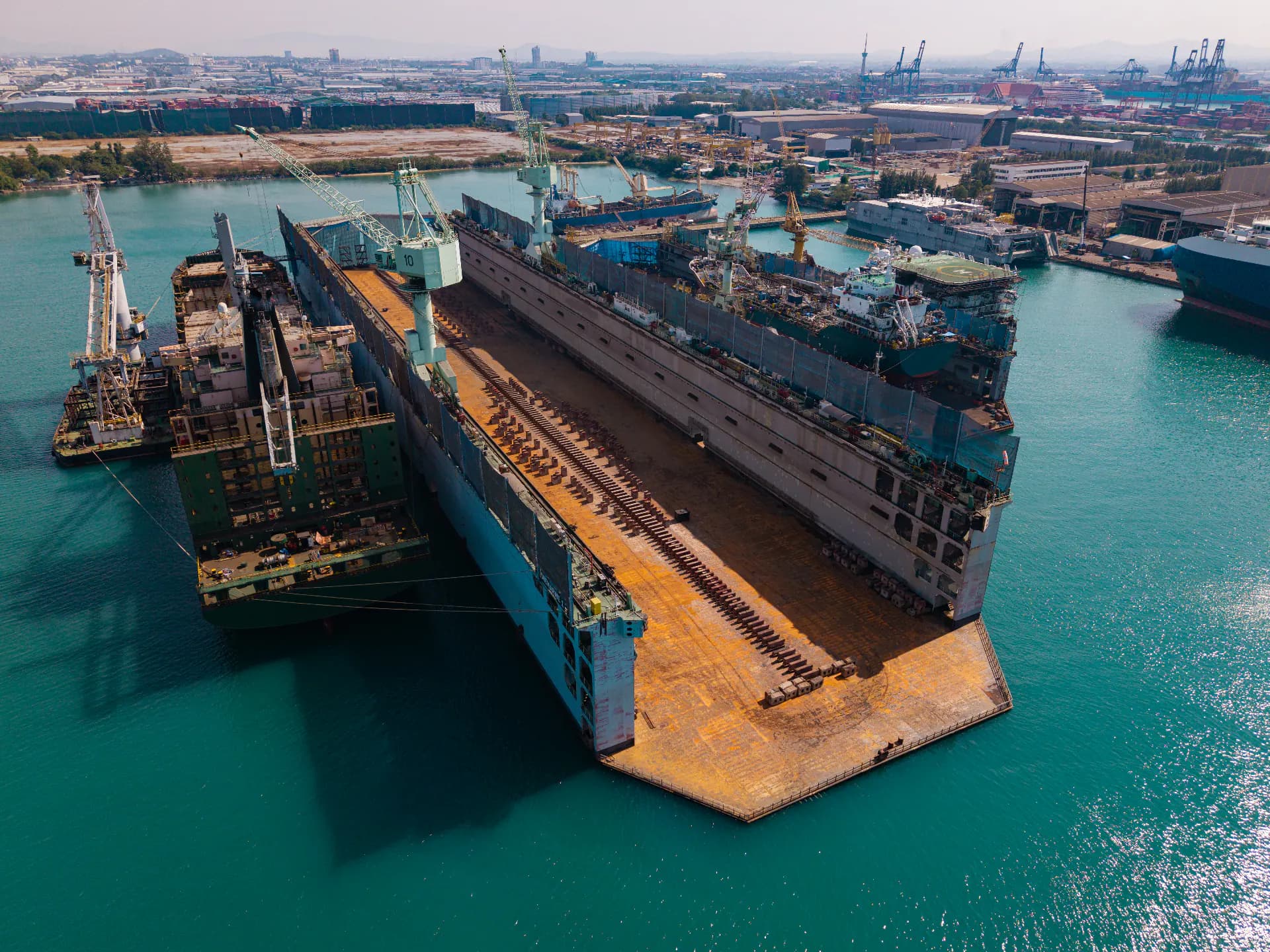
China State Shipbuilding Corporation recorded operating revenue of RMB91.53bn, about $13.28bn, in the first half of 2026, a rise of 26% year on year, while net profit rose 163.5% to RMB9.95bn.
The group attributed the improvement to increased deliveries of high-end civil vessels, a higher proportion of premium ship types and rising average vessel prices. Those three factors are the ones that separate a busy yard from a profitable one: a book filled at the top of a cycle only shows up in earnings when the ships built at those prices reach delivery, which is what has now begun.
New orders in the half covered 177 civil and offshore vessels totalling 22.45m dwt with a contractual value of RMB119.39bn. Ordered deadweight surged 128.82% year on year and total order value jumped 93.06%. Beyond new vessel contracts, the company took 367 ship repair orders worth RMB2.596bn.
The backlog is the more telling number. At the end of June the group held 729 undelivered civil and offshore vessels representing 93.89m dwt and RMB526.27bn in contractual value, alongside 157 outstanding repair orders worth RMB1.02bn. By ship count, oil tankers account for 30% of the order volume, followed by container ships at 20%, bulk carriers at 15%, liquefied gas carriers at 10%, and special-purpose vessels and other types at 25% together.
Delivery performance kept pace. CSSC completed 102 vessels in the first half covering 9.56m dwt, which represented 60.71% of its full-year delivery target and a 27.50% increase year on year, and completed 397 ship repair projects generating RMB3.069bn in repair revenue.
The company noted that shipbuilding is highly correlated with global economic trends and shipping market cycles, and that market conditions, newbuilding pricing and construction costs are the key variables shaping yard profitability. It described the dual development of military and civil ship businesses as the core pillar supporting sustained growth, a structure that gives the group a demand floor that private yards elsewhere do not have.
The commercial side has been visible in the order announcements. Guangzhou Shipyard International, a CSSC subsidiary, disclosed a contract worth more than $1bn for 10 LNG dual-fuel pure car and truck carriers of 8,200 CEU each, set out in the PCTC orders signed at SMM. With a backlog stretching delivery slots towards the 2030s, the pricing power that produced the margin improvement is unlikely to reverse quickly.